In Somalia, a drought is rarely just a drought. It is a catalyst for displacement, economic collapse, and resource-based conflict.
International development discourse often treats climate change and social instability as two separate portfolios. However, for those of us working on the ground, it is clear that these issues are inextricably linked. The work of Horn Environmental and Social Sustainability (HESS) is a direct response to this profound dual crisis: a fragile ecosystem under immense stress and a social landscape facing critical challenges to its resilience and cohesion.
To build a sustainable future for the Horn of Africa, we must recognize that true peace requires healing both the ecological damage and the social fractures simultaneously.
Sustainable change must be community-owned. We do not deliver pre-packaged solutions.
The Environmental Trigger
Somalia’s natural environment is the foundation of its people’s livelihoods, yet it faces a convergence of critical threats. The nation is highly vulnerable to climate change, enduring devastating cycles of severe drought and flooding.
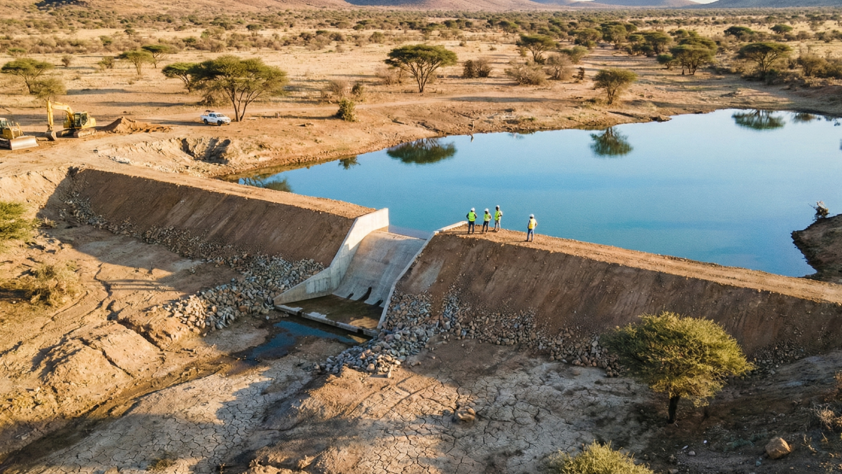
Beyond extreme weather, chronic water scarcity is worsened by the uncoordinated and unsustainable management of shared water resources. Furthermore, widespread deforestation driven by unsustainable practices like charcoal production, combined with overgrazing, has led to severe soil erosion and desertification. This degradation strips the land of its productive capacity, creating an environment where survival becomes a daily struggle.
The Social Fallout: Scarcity Breeds Conflict
When the land fails, the social fabric unravels. With the majority of the Somali population dependent on climate-sensitive agriculture and pastoralism, these environmental shocks directly threaten the livelihoods of millions.
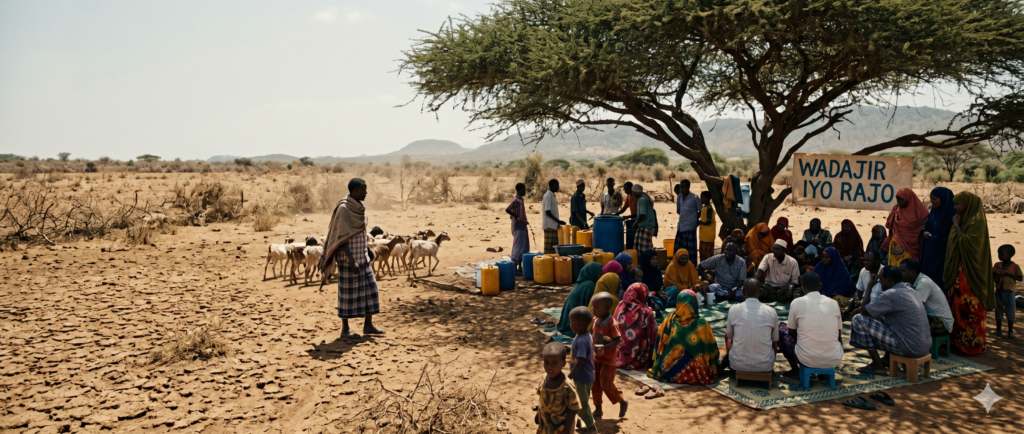
As viable grazing land and accessible water sources shrink, competition intensifies. This increasing scarcity has become a primary driver of local conflict between communities and clans, disrupting local economies and unravelling social cohesion.
These challenges are heavily compounded by weak governance. A lack of robust local institutions leads to the unsustainable use of remaining resources. Crucially, traditional decision-making processes often exclude women, youth, and other marginalized groups who bear a disproportionate share of the climate burden but are left out of the planning process. Furthermore, widespread unemployment among Somalia’s large youth population deepens poverty and fuels cycles of instability.
The HESS Approach: Integrated Healing
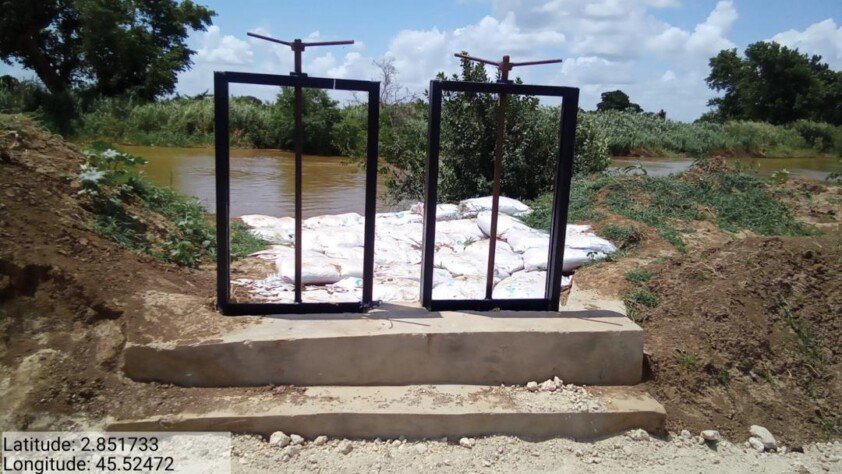
You cannot engineer a sustainable water catchment system if the communities sharing it are in active conflict over land rights.
At HESS, we believe that investing in sustainable natural resource management—from improved agriculture to green infrastructure—can create new, meaningful livelihood pathways that reduce the vulnerability driving instability. Given the context of resource-based disputes, all our programming is designed to be strictly conflict-sensitive. We conduct thorough conflict analyses to ensure our interventions “do no harm”.
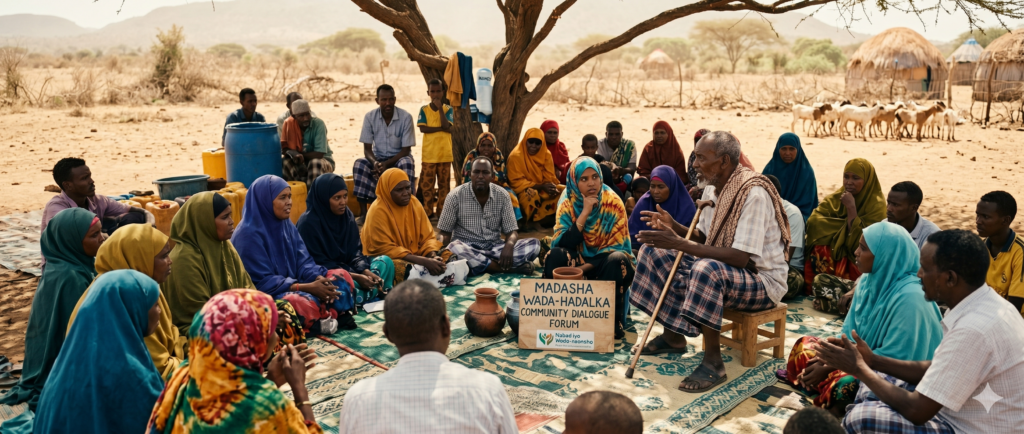
By utilizing Participatory Rural Appraisal (PRA) tools, we act as expert facilitators, guiding communities to map their own resources, identify challenges, and negotiate shared solutions. We ensure that women, youth, and marginalized groups are elevated into decision-making roles within local resource management committees.
The path forward is clear: Progress is only possible through inclusive, community-centered solutions. By addressing Somalia’s dual crisis with evidence-based science and deep local empathy, we can transform vulnerability into lasting resilience.